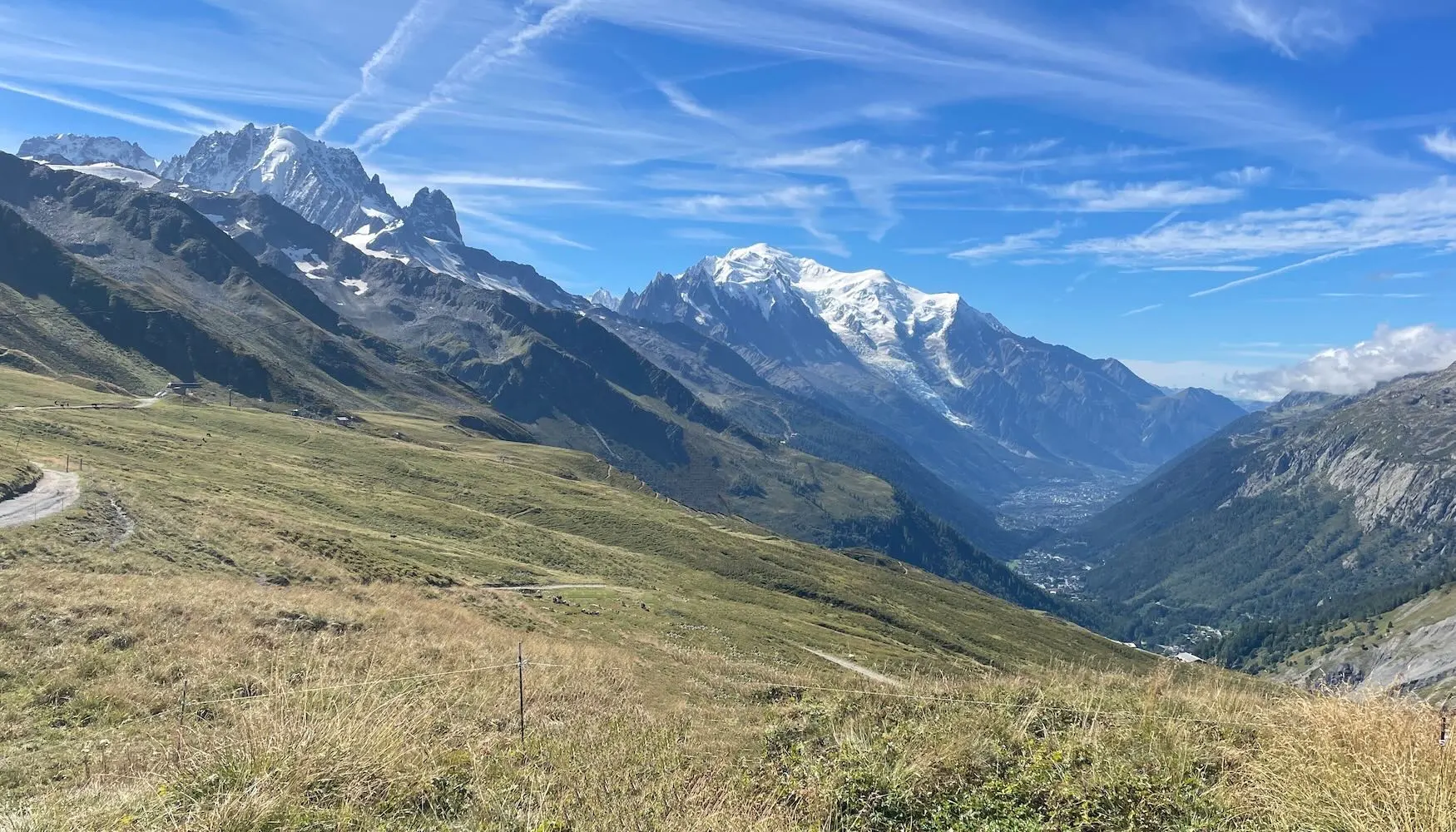
This time, I took on the challenge of the 170km long-distance hike, the Tour du Mont Blanc (TMB), for the first time.
Until then, I had mostly only done day hikes and had only stayed overnight in a mountain hut once, so at first, I wasn’t confident whether I could keep walking for 10 days or even make it to the finish.
Still, I was able to complete it successfully thanks to proper research and preparation beforehand. However, among the people I met along the trail, there were quite a few who didn’t seem to be adequately prepared.
The TMB is one of the most popular hiking routes in Europe, and since it has very few technically difficult sections, it can be considered a beginner-friendly route. In addition, multiple travel agencies now offer tour packages, making it easily accessible to people from all over the world.
Because of this, even those with little hiking experience can attempt it—and that’s exactly why common beginner mistakes were quite noticeable.
In this article, I’ll share the preparations that I’m glad I made in advance, as well as tips to help you enjoy and successfully complete the TMB.
If you’re thinking about taking on the TMB, I highly recommend giving this a read.
You can also read my full hiking diary here ↓

Preparation Needed Before Departure
Schedule & Reservations
The first thing you need to decide is when to go—and whether you can secure accommodation for those dates.
The hiking season for the TMB is generally said to be from late June to early September, but since it attracts hikers from all over the world, mountain huts fill up quickly. Many people book at least six months in advance, and some even a year ahead.
If you book directly, you’ll need to plan your 10-day itinerary, choose where to stay each night, and contact each mountain hut individually. If your preferred huts are fully booked, you’ll also need to adjust your schedule accordingly.
That’s why I used a trekking agency called bookatrekking.
Although it’s called a “tour,” it doesn’t include a guide—instead, it provides an itinerary, GPS maps, and arranged mountain hut accommodations (including breakfast and dinner).
TMB tour page: https://bookatrekking.com/en/trek/tour-du-mont-blanc-10-days/

This agency also offers options such as routes covering only the western or eastern sections of the TMB, as well as 12-day itineraries, so you can choose a plan that suits your level and schedule.
Even these tours become fully booked closer to the date, so it’s best to reserve as early as possible (I booked about five months in advance).
You can pay in installments, and you can cancel for free up to 8 weeks before the tour, so I recommend securing your dates early.
Camping is also an option, but in some areas it is prohibited, so you need to check in advance.
For example, in Italy’s Aosta Valley, camping below 2,500m is not allowed.
Source: https://www.autourdumontblanc.com/en/accomodations/bivouac
Training
One thing I noticed quite often on the TMB was people participating without sufficient training.
Most people had some hiking experience or exercised regularly, but many had never walked long distances of up to 20km in a single day like on the TMB, nor were they used to walking for several consecutive days. It seemed that light daily exercise alone was not enough preparation.
As a result, some people couldn’t recover their energy, had to take buses along the way, or were forced to drop out. This made me realize that proper training beforehand is essential to complete the route.
The training I researched and found most effective was regularly walking long distances under conditions similar to actual hiking.
I started with around 10km, then gradually increased to 15km and 20km. I also increased frequency from once a week to twice, and ideally three times.
Since the Netherlands, where I live, is flat and has no mountains, I trained by walking in large parks.
Two particularly important things during training are: wearing your hiking boots and carrying a backpack with the same weight you’ll have on the trail.
This helps prevent blisters and allows you to get used to walking with weight, reducing unexpected problems once you’re on the mountain.
It also helps you adjust your packing weight, making this experience essential.
[Get used to mountain huts]
This may not strictly be “training,” but if you’ve never stayed in a mountain hut before, it’s highly recommended to try it in advance. Mountain huts vary in size and facilities, but if you’re not used to sleeping in shared spaces in the mountains, you may struggle to get enough rest or not know what to prepare. Staying at least once beforehand is highly recommended.
Packing
Another area where beginners tend to make mistakes is packing.
The key issue isn’t usually missing essential gear, but rather bringing unnecessary items and making the pack too heavy.
For example, I met hikers carrying jeans (which aren’t needed on trails) or bringing excessive amounts of shampoo and detergent.
Since meals are provided at mountain huts, you should carefully select only the necessary snacks and avoid adding unnecessary weight.
If you take regular medication, be sure to bring enough for the entire duration. Also, especially in summer, temperature changes can be significant, and fatigue can weaken your immune system, making you more susceptible to illness—so carrying basic medication is reassuring (in fact, during the latter half of the trip, I saw people getting sick almost every day).
To keep walking for 10 days, it’s important to take care of your body and minimize fatigue.
Getting enough sleep each night is ideal, but in shared dormitories, it can sometimes be difficult to sleep well.
In such cases, earplugs that completely block noise—or even sleep aids if necessary—can be helpful.
[List of things I packed] *For end of Aug – early Sept.
- Hiking shoes
- T-shirts x2
- Leggings x2
- Shorts x1
- Underwear x3
- Socks x3
- Fleece
- Jacket
- Rainwear
- Hat
- Gloves (lightweight)
- Sandals (for mountain huts)
- Backpack
- Trekking poles
- Headlamp
- Sunglasses
- Sleeping liner
- Quick-dry towels x2
- Hydration bag
- Protein bars x12
- Shampoo
- Shower gel
- First aid kit (tape, bandages, painkillers, stomach medicine)
- Mobile phone
- Powerbank
- Charging cables
- Passport
- Cash and cards
- Sunscreen
- Earplugs
- Plastic bags (for trash)

Tips to Enjoy the TMB Even More
Here I’d like to share some tips to help you enjoy the TMB even more.
Check highlights and scenic spots in advance
The TMB route offers breathtaking scenery almost everywhere, so I never felt bored or struggled along the way.
The surrounding mountains, streams, lakes, and views from mountain huts are all unique and constantly changing, making the journey endlessly enjoyable.
There are also highlights beyond nature, such as charming old buildings and churches in small villages.
If you’re lucky, you may even encounter wildlife like ibex or marmots.
By checking these highlights and scenic spots in advance, you can look forward to what kind of views await you each day, making the experience even more enjoyable.

Bring something to pass the time
Depending on the day, there were times when I arrived at the next mountain hut in just a few hours, or had long periods of free time between check-in and dinner. Even after showering, stretching, or taking a nap, I sometimes still had extra time.
In such moments, reading a book or writing in a journal is highly recommended. Surrounded by nature and free from distractions, it’s easy to fully immerse yourself.
I downloaded a longer book in advance and read it whenever I had time.
If you enjoy listening to music while walking, it’s also a good idea to download it beforehand.
Connecting with other hikers
At first, everyone is a stranger, but by around day three, you start recognizing which groups are following similar schedules.
At the huts, I met many solo travelers like myself, and we exchanged information—where we had been, where we stayed, and where we were heading next. These interactions became one of the most enjoyable parts of the journey.
Not everyone starts from the same place or follows the same 10-day pace. Some complete it in 7 days, while others walk in reverse.
Some, like me, follow an itinerary arranged by an agency with pre-booked accommodations, while others plan everything independently. This makes each experience different, and exchanging information is incredibly valuable.
Through these conversations, I learned about alternative routes and nearby scenic spots, which turned out to be very useful.
There’s also a wide diversity of nationalities, so you get to hear about different backgrounds and motivations for doing the TMB. These conversations were fascinating and became a memorable part of the experience.
For example, I walked with a Dutch girl attempting her first solo hike, listened to stories from a Canadian couple in their 70s about mountains they had climbed around the world, shared beers with an international group who plan hiking trips together every year, and even played games with a group of Israelis who were about to begin military service when they returned home…
Meeting people I would normally encounter in my daily life made this journey truly unforgettable.

Summary
The TMB is a hiking route that even beginners can take on, but it’s essential to gather proper information in advance and prepare thoroughly, including training.
Using a travel agency can also lower the barrier for first-time hikers, making it easier to participate.
The TMB offers a unique opportunity to enjoy the breathtaking scenery of the Alps while connecting with people from all over the world—why not consider adding it to your next hiking plan?