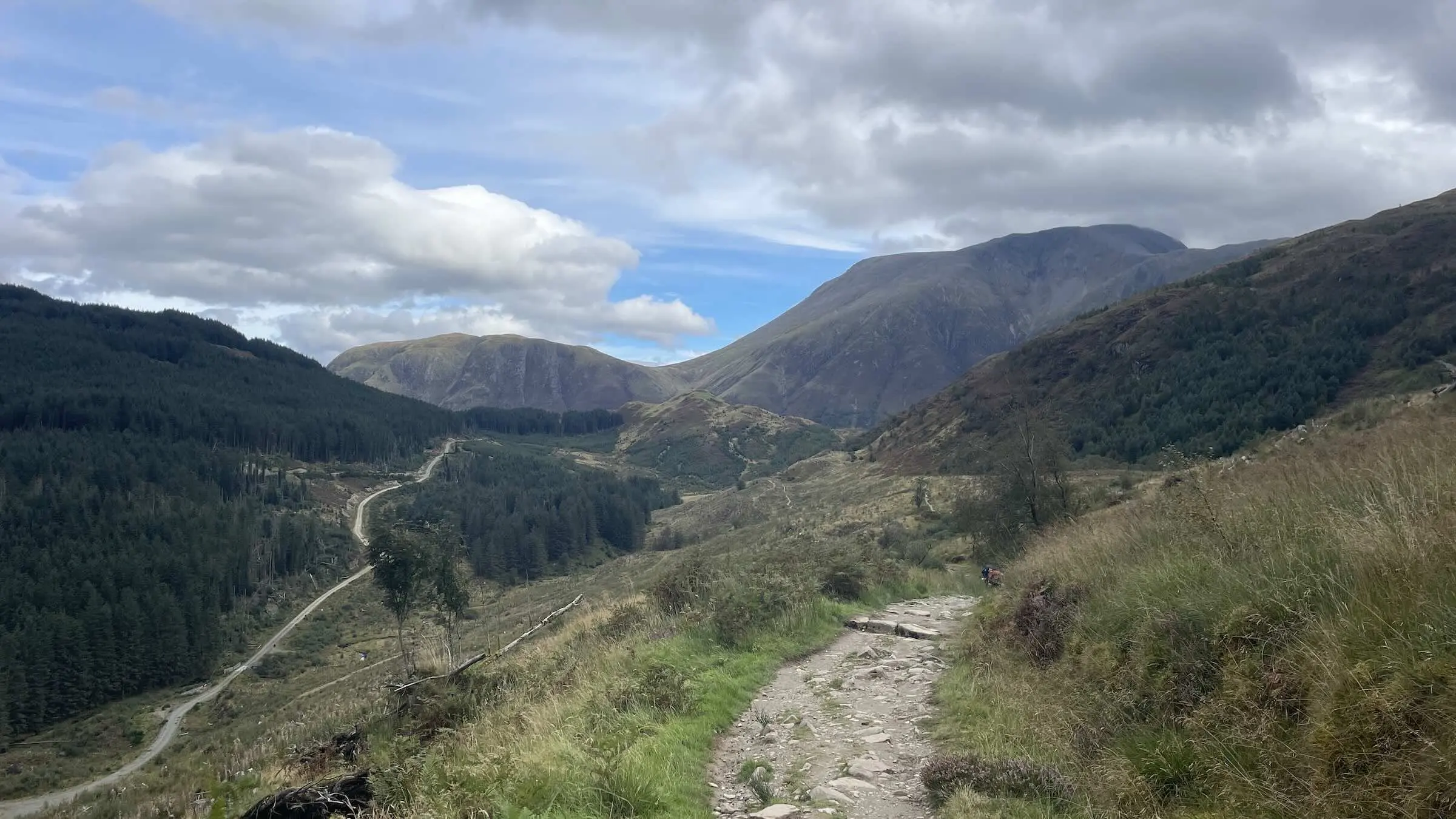
Are you familiar with the West Highland Way (WHW), a hiking trail located in Scotland, UK?
The UK might bring to mind cities like London, but the northern regions — particularly Scotland — are full of rich natural landscapes and are very popular with outdoor enthusiasts. While there are many hiking trails in Scotland, the WHW stands out as the country’s most iconic long-distance route.
Below is an overview of the trail, its difficulty level, costs, and the best time to visit.
What Is the West Highland Way?
The West Highland Way is a trail running through the Scottish Highlands, starting in Milngavie (pronounced “Milguy”) and finishing in Fort William, covering approximately 154km in total.
It’s one of the UK’s most beloved trails, packed with the highlights of Scotland’s natural beauty. Wild camping is permitted throughout much of Scotland (with some exceptions), so many people complete the entire route as a backpacking trip, sleeping in tents each night.
That said, hotels and other accommodation are available at various points along the route, and there are also Baggage Transfer services that transport your luggage between overnight stops — making the trail accessible to those who prefer a more comfortable experience.
Most people complete the route in 7 days, though some do it in as few as 5 or as many as 10, depending on fitness level and pace.
Can Anyone Do It?
Despite covering 154km, the trail has no steep technical sections and is manageable for anyone who can sustain long-distance walking.
The author completed it in 7 days, covering roughly 17–30km per day. You can break each section into shorter stages to slow down, or combine sections to finish faster. Planning at your own pace is key.
If you plan to stay in hotels, advance booking is essential. For wild camping (in nature rather than designated campsites), you have more flexibility to adapt as you go based on conditions.
Of the hikers the author encountered on the trail, roughly half were staying in tents or hostels, about 40% in hotels (most using Baggage Transfer), and around 10% were wild camping.
How Much Does It Cost?
Costs vary primarily based on where you sleep. Here’s a rough breakdown departing from Glasgow:
Staying in hotels
Hotels along the route start from around £100 per night, so a 7-day trip requires at least £600 for accommodation alone. Adding train fares (Milngavie + Fort William to Glasgow: £30), and two nights in Glasgow before/after (~£200), the total comes to around £8-900.
Baggage Transfer adds approximately £70 (~¥14,000) on top of that.
(Reference: https://www.highlandtransfers.com/book-online )
Tour packages including accommodation and meals are also available (from around £745 per person), which can save the hassle of booking everything separately.
Staying in hostels or campsites
Hostel dorm beds run £20–35 per night; campsites cost £10–16. Including travel and Glasgow accommodation, the total is roughly £500 for hostels or £350 for campsites.
Note: Hotels, hostels, and campsites along the route all offer opportunities to resupply food and water each day, so you don’t need to carry all your meals for the entire trip. Many campsites have kitchens, and some sell basic provisions.
Wild camping
If you wild camp the entire way, there’s no accommodation cost at all — just flights, trains, and a couple of nights in Glasgow.
One important caveat: while wild camping is broadly legal in Scotland, there are some managed zones where a permit is required. Along the WHW, the area around Loch Lomond falls under this restriction from March 1 to September 30.
You can apply for a permit at: https://www.lochlomond-trossachs.org/things-to-do/camping/go-wild/
It’s possible to avoid this zone, but that may mean longer daily distances, so plan carefully in advance.
When is the Best Season?
The recommended period is May through early October. While the Scottish Highlands aren’t at especially high altitude, they sit further north than Hokkaido, Japan, and temperatures can drop below freezing in winter. The milder spring-to-autumn window makes for the most enjoyable conditions.
Peak season is June to August (school holidays), which can get crowded, so planning around this if possible is advisable.
Regardless of season, rain is a near-constant companion in Scotland. During the author’s late-August trip, only 2 out of the 7+ days were completely dry — the rest involved intermittent or all-day rain. Since gear doesn’t always dry out fully between days, it’s important to think carefully about clothing choices, how you pack, and how you rotate wet items to avoid getting run down.
Summary
This guide is intended to help anyone considering the WHW to understand how to plan the trip and what level of fitness and experience is needed.
A full day-by-day trip report from the author’s August 2025 attempt is also available below.

Leave a Reply